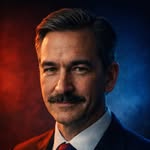
U.S. President Donald Trump sparked a massive social media firestorm on Thursday, March 26, 2026, after claiming during a Republican event that Iranian officials offered him the position of Supreme Leader.
Speaking at a podium flanked by National Republican Congressional Committee (NRCC) branding, Trump boasted that Tehran is "desperately negotiating" behind the scenes because they are terrified of both their own citizens and the United States military.
The President asserted that while Iran wants a deal "so badly," their leadership is too paralyzed by fear to admit it publicly, culminating in what he described as a literal offer to lead the Islamic Republic.
"No thank you!" Trump told the laughing crowd, recounting his supposed response to the offer while expressing mock gratitude.
The President went on to dismiss the role entirely, stating that no head of a country has ever wanted a job less than being the head of Iran.
He punctuated the anecdote by declaring that the United States is currently "winning so big" in the Middle East.
The 45-second clip, which was widely circulated by geopolitical aggregators like @NewsAlgebraIND, quickly amassed over 2 million views as users debated whether the comments were a strategic display of bombast or a total departure from diplomatic reality.
The viral footage has drawn a polarized reaction, with critics labeling the "Supreme Leader" anecdote as delusional and "peak reality TV presidency."
Many observers pointed to the ongoing military friction in the region, including recent attacks on U.S. bases and the effective closure of the Strait of Hormuz, as evidence that the administration's "winning" narrative may be out of sync with the ground truth.
Conversely, supporters have defended the remarks as classic Trump hyperbole designed to project strength and humiliate a foreign adversary during a high-stakes conflict.
Diplomatic analysts note that such over-the-top rhetoric is a hallmark of the President’s 2026 energy, aimed at keeping adversaries off-balance while maintaining domestic enthusiasm.
However, the timing of the "Supreme Leader" claim is particularly sensitive as global oil prices remain volatile and regional allies call for a more conventional diplomatic framework.
While Tehran has not issued a formal response to the President’s specific anecdote, the video continues to serve as a lightning rod for broader debates over the efficacy of "maximum pressure" rhetoric in the middle of an active military campaign.
Transparency notes
Published: Mar 26, 2026. No major post-publication update has been logged.
Spot an error or missing context? Email hi@kindjoe.com and we will review and correct if needed.
Sources
External source links were not provided in this article body. Our editors reference publicly available materials and update stories as new verified information arrives.
What's your take on this story?
Vote before the outcome is known and compare your call with the crowd.
No community take has been linked to this story yet.