Trump Issues Warning to Iran Over Reported Tanker Tolls in Strait of Hormuz

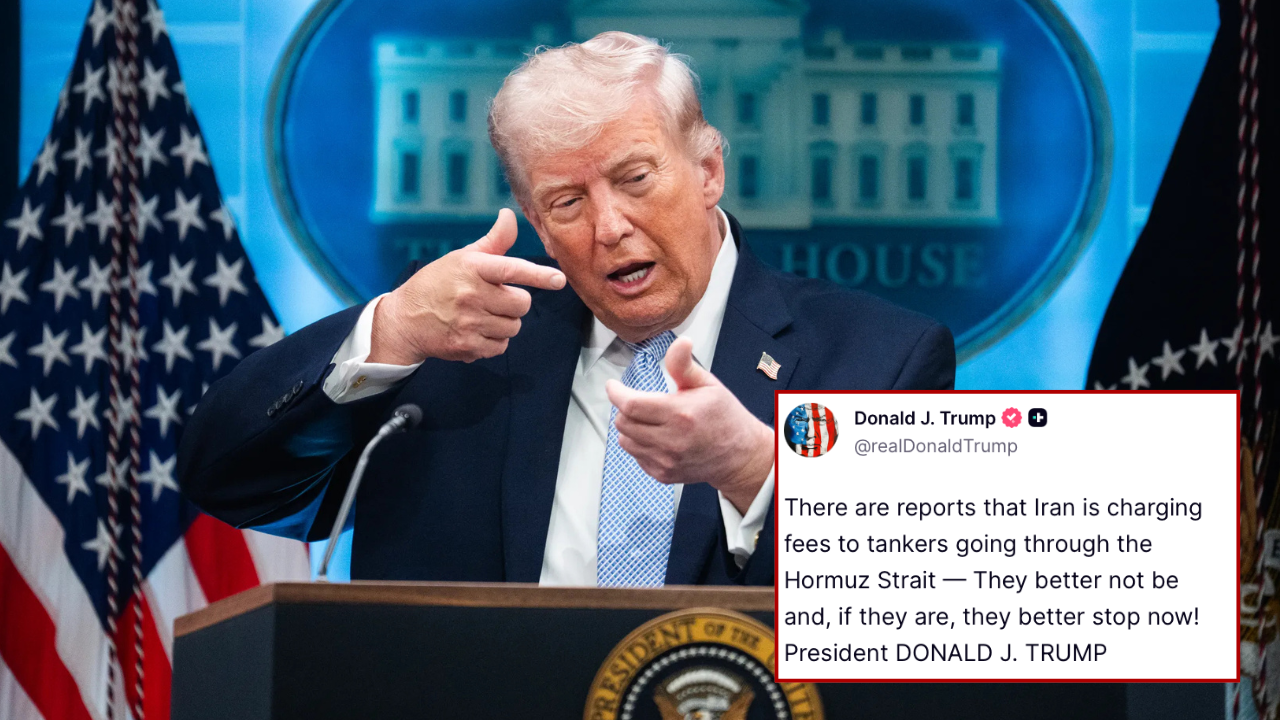
President Donald J. Trump issued a stern warning to Iranian leadership on Thursday morning following reports that Tehran has implemented new transit fees for oil tankers moving through the Strait of Hormuz. The President’s remarks come amid a fragile two-week ceasefire between the United States and Iran.
"There are reports that Iran is charging fees to tankers going through the Hormuz Strait — They better not be and, if they are, they better stop now!" President Trump stated in a public message. The warning targets a newly reported policy where Iran is allegedly imposing tolls reaching as high as $2 million per vessel.
Maritime industry reports indicate the fees are structured as either a flat rate per ship or a $1 per barrel charge. These payments are reportedly being requested in cryptocurrencies or Chinese yuan, bypassing traditional international financial systems.
The Strait of Hormuz remains one of the world's most critical maritime chokepoints, through which approximately one-fifth of global oil consumption passes daily. Reopening the waterway without restrictions was a foundational requirement of the current ceasefire agreement reached earlier this month.
Iranian officials have reportedly asserted control over the passage, characterizing the fees as necessary for "regulated passage." Sources in Tehran suggest the revenue is intended to fund domestic rebuilding efforts following recent military strikes, with a portion potentially shared with Oman.
Shipping companies and international maritime bodies have expressed immediate concern over the development. The imposition of tolls on a primary international waterway presents significant legal challenges under the United Nations Convention on the Law of the Sea.
International law generally guarantees the right of "innocent passage" for vessels through international straits. Legal experts suggest that unilateral tolls by a coastal state could be viewed as a violation of long-standing maritime norms and treaty obligations.
Economists warn that these added costs, combined with the risk of renewed instability, could lead to a sharp increase in global oil prices. Shippers are currently evaluating the financial viability of using the route under these new conditions.
The White House has not yet specified what actions might be taken if the reported fee collection continues. Diplomatic and military observers continue to monitor vessel movements in the Persian Gulf as the situation evolves.